The idea of a humanoid robot building an airplane might seem far-fetched, but a new deal between European aerospace giant Airbus and Chinese robotics firm UBTech suggests this scenario could become a reality.
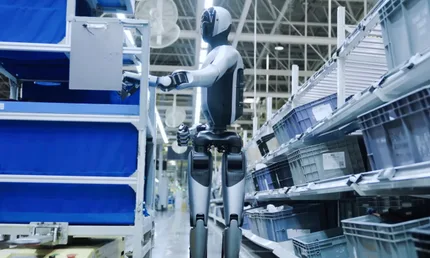
Bloomberg reported on Monday that Airbus’s deal with UBTech involves the use of the Walker S2 humanoid robot.
Details are still scarce, but reports indicate that Airbus is keen to explore the possibility of putting this humanoid robot on its assembly line, likely to assist workers in building new aircraft.
UBTech unveiled the Walker S2 in 2024. The bipedal robot stands 176 centimeters (69.3 inches) tall, supports AI-powered voice interaction via built-in microphones and speakers, and features highly flexible hands with 11 degrees of freedom. The Walker S2 can even replace its own battery when needed, enabling it to operate around the clock if necessary.
Advanced robots have been a part of assembly lines for decades, but humanoid robots offer additional advantages thanks to their versatility and adaptability, including the ability to seamlessly switch tasks with minimal intervention. These robots can also be integrated into most work environments without costly modifications.
While humanoid robots have made significant progress in recent years, it remains unclear how well they are ready to perform effectively in complex industrial environments. However, Airbus’s deal with UBTech demonstrates a strong belief in the potential benefits of these robots in the workplace.
We have reached out to Airbus for more details on its plans to deploy the Walker S2 robot and will update this article as soon as we receive a response.
We recently saw the Walker S2 robot demonstrate its skills on a tennis court, expertly hitting a ball alongside a human partner in an impressive display of its technical capabilities.
Shenzhen-based UBTech, founded in 2012, received nearly $200 million in orders from a diverse range of customers last year and plans to produce up to 10,000 Walker S2 robots by 2026.
UBTech’s deal with Airbus follows a similar agreement it signed last month with US semiconductor manufacturer Texas Instruments, as the robotics company seeks to expand globally in a rapidly growing sector expected to become even more competitive by 2026.